Nuclear disaster sites expose a hard limit for robots: people may need the data, but they can't safely reach the machine. That pressure taught robotics to value remote control, simple repairs, and useful information over a smooth demonstration.
- Radiation can damage cameras, motors, cables, and control electronics.
- A tether may limit movement, but it can keep power and data flowing.
- A robot that returns one clear image can help more than an autonomous system that stops out of reach.
Distance changes the design
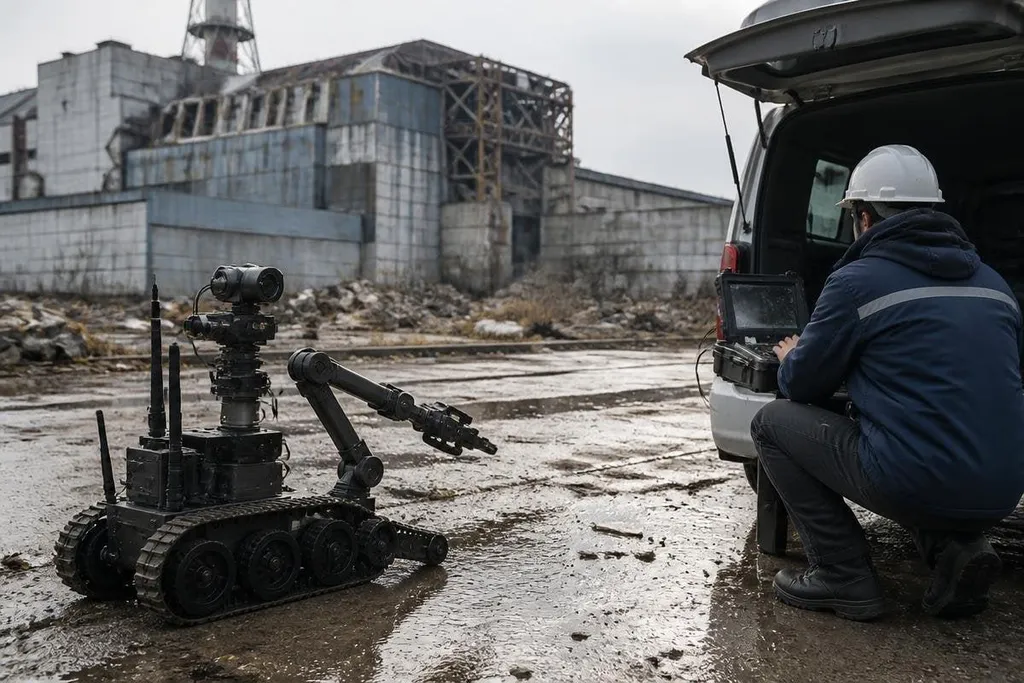
A robot sent into a damaged reactor building needs more than wheels and a camera. Its operators may have to work from another room, another building, or a vehicle outside the hazard area.
That distance adds delay. Radio signals may weaken behind concrete and steel.
A cable can carry commands, video, and power, but the cable can snag on doors, rubble, or pipes. Every extra metre changes how the robot turns and how quickly it can leave.
The lesson is plain: remote operation must be part of the machine from the start. Controls need to show where the robot is, which way it faces, how much cable has paid out, and whether the next movement could trap it.
Operators also need more than a live video feed. A camera may fail, become covered in dust, or point at a wall after a collision. Heat, radiation, low light, and damaged buildings can remove the signals people normally use to judge distance.
Failure is part of the mission
A robot in a hazardous site may fail after one useful task. That can still be a good result if the task was chosen well and the machine carried enough information back.
This changes how teams plan. They need a clear order of work: check the route, inspect the target, collect the needed data, and leave before the robot loses power or movement. A machine built for one short inspection may be more useful than a larger system that needs a long setup.
The robot also needs a recovery plan. Operators should know where to place a second machine, how to pull a stuck unit back, and which parts can be replaced without sending people into the area. A tether point, spare camera, or manual release can matter more than a higher top speed.
Sensors need a job
Nuclear response work shows why a sensor list is not a plan. Each sensor must answer a question that changes the next action.
A radiation sensor can show where exposure rises. A camera can show damaged equipment or blocked access. LiDAR can help build a map when visible features are poor. Temperature sensors can warn that a route or object is unsafe to approach.
The data also needs a human use. A map that arrives too late may not help an operator choose a route. A radiation reading without location data may not show where the hazard begins. A clear image with a time and position can be more useful than a large stream of poorly labelled data.
Nuclear disaster robots are judged by the evidence they return, not by the danger of the setting. Nuclear disaster robotics reporting can help you compare a robot’s route and sensor readings with the task and operator decisions behind them. That record leads into autonomy, where a machine may act alone but still needs clear limits and human control.
Autonomy has a narrow place
Autonomous movement can reduce the amount of control data sent through a damaged site. It can help a robot hold a heading, avoid a wall, or return along a known path.
It cannot remove the need for people. A map may be incomplete, the floor may shift, and the task may change after the robot reaches the target. Operators still need a way to stop the machine, change the route, and review the data.
The better design gives autonomy a small job and keeps human control available. That approach also makes testing easier because each automatic action has a clear limit.
A field checklist before deployment
Use this list before sending a robot into a hazardous building:
- Set the first task: define the one image, reading, or map the robot must return.
- Test the link: check control and video through the same walls, doors, and distance expected on site.
- Mark recovery points: record where a stuck robot can be pulled back or reached by another machine.
- Protect the data: save sensor readings with time, location, and robot position.
- Plan the last move: decide how the team will respond if power, video, or movement fails.
I’d judge a disaster-response robot by the data it brings home, not by how long it keeps moving.
That standard leaves an open task for robotics teams: build machines that can fail early, report clearly, and still give operators enough information to make the next safe decision.